HP TET Question Papers and Answer Keys: A Scholar's Complete Preparation Resource
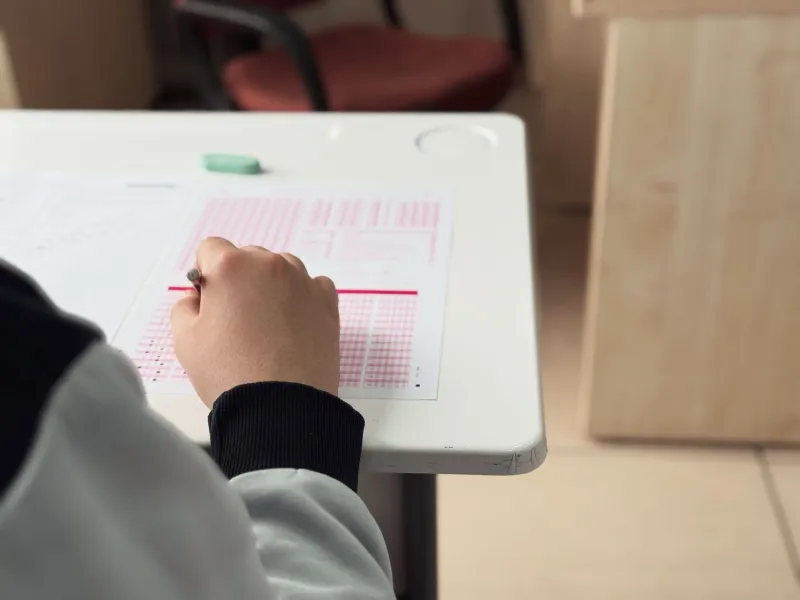
The Himachal Pradesh Teacher Eligibility Test (HP TET) represents one of the most important academic milestones for aspiring teachers seeking certification in Himachal Pradesh, India. For students and scholars using international academic databases and digital library platforms, understanding how to locate, analyze, and learn from official examination question papers and their corresponding answer keys is a foundational research and study skill. This guide approaches HP TET preparation as an exercise in disciplined academic inquiry—one that mirrors the methods scholars apply to any structured body of knowledge.
What Is the HP TET and Why Do Answer Keys Matter?
The HP TET is a state-level teacher eligibility examination administered by the Himachal Pradesh Board of School Education (HPBOSE). It assesses candidates across multiple subject areas and pedagogical competencies, with separate papers for different teaching levels—Primary (TGT), Non-Medical, Medical, Arts, Shastri, and Language Teacher streams, among others.
Answer keys serve a dual function in this context. First, they provide candidates with an authoritative reference for evaluating their own performance after sitting a practice or official examination. Second, and perhaps more importantly from an academic standpoint, they function as analytical documents—revealing the structure of correct reasoning, the scope of tested content, and the depth of subject knowledge that examiners expect. When studied systematically, answer keys transform from simple score-checking tools into comprehensive curriculum maps.
How to Access Official HP TET Question Papers
For scholars committed to working with primary and authoritative sources, the most reliable repository for HP TET question papers is the official HPBOSE website. The board periodically releases previous years' question papers, provisional answer keys, and—after the resolution of any objections—final answer keys. Candidates are strongly encouraged to use these official documents rather than third-party compilations, which may contain errors or outdated content.
In addition to official board releases, several accredited educational databases and government-affiliated academic portals archive previous examination materials. When using any secondary source, scholars should verify the year of the examination, the paper code, and whether the answer key reflects the final or provisional version, as provisional keys are sometimes revised following candidate challenges.
Understanding the Structure of HP TET Question Papers
Each HP TET paper is typically divided into sections that test both content knowledge and pedagogical understanding. For example, a science-stream paper may include sections on:
- Child Development and Pedagogy: Questions on learning theory, developmental psychology, and inclusive education practices.
- Language Competency: Assessments of Hindi and English reading comprehension, grammar, and communication.
- Subject-Specific Content: Depending on the stream, this may include questions drawn from physics, chemistry, biology, mathematics, or social sciences at the level appropriate to the teaching grade.
Analyzing the distribution of questions across these sections in previous papers allows candidates to identify high-yield topics—those that appear with consistent frequency across multiple examination cycles. This kind of pattern recognition is a well-established academic study strategy, analogous to the literature review process researchers use to identify dominant themes within a body of scholarship.
How to Use Answer Keys as Active Learning Tools
Passive review of an answer key—simply checking which answers were correct or incorrect—represents the least effective use of this resource. Scholars preparing for the HP TET are advised to engage with answer keys through active analysis:
-
Error Classification: For each incorrect response, determine whether the error stemmed from a knowledge gap, a misreading of the question, a reasoning error, or a time-management failure. Each error type requires a different remediation strategy.
-
Distractor Analysis: Multiple-choice examinations are carefully constructed so that incorrect options (distractors) reflect common misconceptions. Studying why a wrong answer was designed to be plausible deepens conceptual understanding of the correct answer.
-
Concept Mapping: After reviewing a full paper with its answer key, construct a concept map linking all tested topics. This visual representation reveals which areas of the curriculum are most densely connected and therefore most likely to appear across multiple question types.
-
Temporal Tracking: Maintain a study journal that records which question types you answered correctly on first attempt versus those requiring review. Over successive practice sessions, this log provides measurable evidence of improvement—a practice consistent with reflective academic self-assessment.
Evaluating the Quality of Answer Key Sources
Not all answer keys available online are equally reliable. Scholars should apply the same source evaluation criteria they would use for any academic document:
- Authority: Is the answer key published by HPBOSE or an institution with verifiable credentials?
- Accuracy: Does the key correspond precisely to the question paper by year, date, and paper code?
- Currency: Has the key been updated to reflect any official corrections following the objection resolution process?
- Purpose: Is the source a disinterested educational resource, or does it serve a commercial purpose that might incentivize the publication of unverified content?
Applying these criteria protects candidates from studying incorrect information—a risk that is particularly consequential in a competitive certification examination where a single incorrect assumption can propagate across multiple related questions.
Subject-Specific Preparation Strategies for Science Streams
For candidates appearing in the HP TET Non-Medical or Medical streams, science content preparation demands particular rigor. Question papers in these streams frequently draw from NCERT textbook content at the secondary and senior secondary levels, but examiners also test applied reasoning and experimental interpretation rather than rote recall alone.
Scholars are advised to:
- Cross-reference HP TET science questions with NCERT exemplar problems, which are designed to assess higher-order thinking.
- Review laboratory-based concepts not only from a procedural standpoint but also from the perspective of the underlying scientific principles.
- Practice explaining concepts in writing, as pedagogical questions often require candidates to demonstrate how they would teach a topic rather than simply define it.
Building a Structured Revision Plan
Effective preparation for any standardized examination is fundamentally a project-management challenge as much as an academic one. Candidates should map the full HP TET syllabus against the topics revealed by previous question papers, then allocate study time proportionally—dedicating more hours to high-frequency topics and weaker subject areas.
A twelve-week preparation timeline might allocate the first four weeks to content review, the middle four weeks to topic-by-topic practice using previous question papers, and the final four weeks to full-length timed mock examinations followed by systematic answer key analysis. This structure mirrors the iterative review cycles used in graduate-level academic preparation and builds both content knowledge and examination stamina simultaneously.
Conclusion
The HP TET question paper and answer key, when approached as scholarly documents rather than mere scoring tools, offer a remarkably rich foundation for structured academic preparation. By treating past examinations as primary sources worthy of careful analysis, candidates develop not only the subject-matter expertise required to pass the test, but also the analytical habits of mind that define effective educators. MyiLibrary Science encourages all examination candidates to approach their preparation with the same rigor and intellectual curiosity they would bring to any serious academic endeavor.