Understanding Static Electricity: Core Concepts, Principles, and Practice Problems Explained
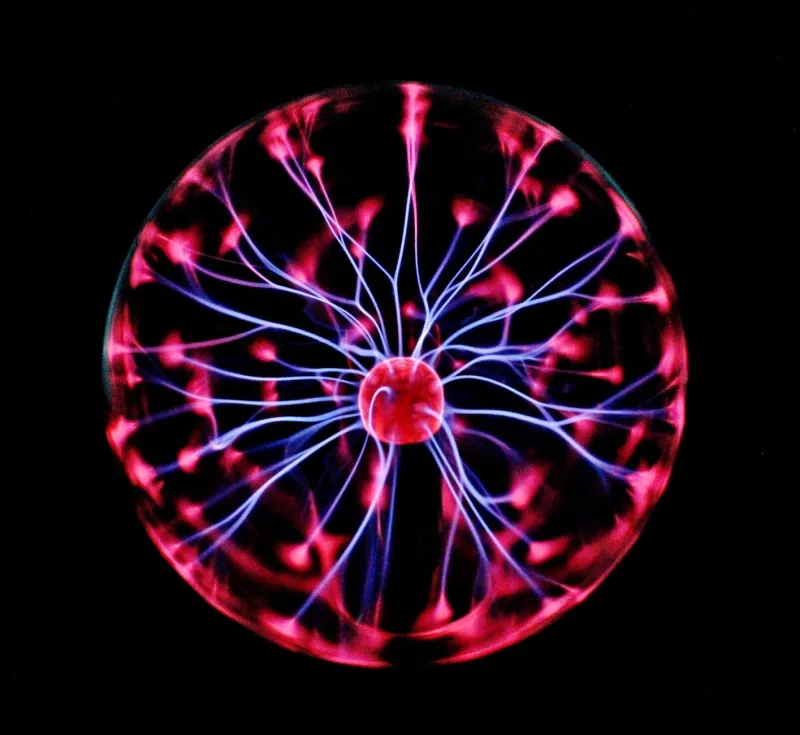
Static electricity is one of those phenomena that most Americans encounter daily without giving it much thought — the shock from a metal doorknob in winter, the way a balloon clings to a wall after being rubbed against hair, the crackling of a wool sweater pulled from the dryer. Yet beneath these familiar experiences lies a rigorous and mathematically precise branch of physics known as electrostatics.
This resource is designed for students working through introductory physics coursework and seeking to build genuine conceptual understanding of static electricity. Rather than simply listing answers, this guide walks through the reasoning behind each major concept so that students can apply that reasoning to novel problems.
What Is Static Electricity?
Static electricity refers to the buildup of electric charge on the surface of objects. Unlike current electricity — which involves the continuous flow of electrons through a conductor — static electricity involves charges that are stationary, or at least temporarily so.
The fundamental principle underlying all of electrostatics is this: like charges repel, and opposite charges attract. This deceptively simple rule governs everything from the behavior of charged balloons to the operation of photocopiers and laser printers.
The Nature of Electric Charge
Matter is composed of atoms, and atoms contain protons (positively charged), neutrons (neutral), and electrons (negatively charged). Under normal conditions, atoms have equal numbers of protons and electrons and are therefore electrically neutral.
Static electricity arises when electrons are transferred from one material to another. The object that gains electrons becomes negatively charged; the object that loses electrons becomes positively charged. This transfer typically occurs through:
- Friction (triboelectric effect): Rubbing two materials together causes electron transfer. The classic example is rubbing a rubber rod with fur — the rod gains electrons and becomes negatively charged.
- Conduction: A charged object directly contacts a neutral object and transfers charge.
- Induction: A charged object brought near (but not touching) a neutral conductor causes a redistribution of charge within the conductor without direct contact.
Conductors and Insulators
A critical distinction in electrostatics is between conductors and insulators.
Conductors — typically metals — allow electrons to move freely through the material. When a charge is applied to a conductor, it distributes across the surface.
Insulators — materials such as rubber, glass, and plastic — do not allow electrons to move freely. Charge applied to an insulator tends to stay where it is placed.
This distinction explains why humans can be shocked by a metal doorknob (a conductor) after building up static charge by walking across a carpet, but why rubbing a plastic comb through hair does not discharge immediately — the charge stays on the comb.
Coulomb's Law: Quantifying Electrostatic Force
The mathematical relationship governing the force between two charged objects was formulated by French physicist Charles-Augustin de Coulomb in 1785. Coulomb's Law states:
F = k(q₁ × q₂) / r²
Where:
- F is the electrostatic force (in Newtons)
- k is Coulomb's constant (approximately 8.99 × 10⁹ N·m²/C²)
- q₁ and q₂ are the magnitudes of the two charges (in Coulombs)
- r is the distance between the charges (in meters)
Several important observations follow from this equation:
- Force increases with charge magnitude. Doubling either charge doubles the force.
- Force decreases with the square of distance. Doubling the distance reduces the force to one-quarter of its original value.
- The force is attractive for opposite charges and repulsive for like charges.
Practice Problem: Two charges of +3 μC and −3 μC are separated by a distance of 0.05 meters. What is the magnitude of the electrostatic force between them?
Solution: F = (8.99 × 10⁹)(3 × 10⁻⁶)(3 × 10⁻⁶) / (0.05)² = (8.99 × 10⁹)(9 × 10⁻¹²) / 0.0025 = 0.08091 / 0.0025 ≈ 32.4 N
The force is attractive because the charges are opposite.
The Electroscope: Detecting Charge
An electroscope is a device used to detect the presence and sign of electric charge. In its simplest form, it consists of a metal rod with two thin metal leaves hanging from one end. When a charged object is brought near or touches the rod:
- If the leaves spread apart, the object has induced or transferred a net charge — both leaves carry the same sign and repel each other.
- If the leaves collapse, a charge of opposite sign has neutralized the existing charge.
Understanding electroscope behavior is a common topic in introductory physics assessments and requires students to reason carefully about charge transfer and induction.
Grounding: Neutralizing Charge
Grounding refers to the process of allowing excess charge to flow from a charged object to the Earth (which acts as an essentially infinite reservoir of charge). When a charged conductor is grounded — typically by connecting it to the Earth with a conducting wire — excess electrons either flow into the ground (if the object is negatively charged) or flow from the ground to the object (if positively charged), restoring neutrality.
Grounding is not merely a laboratory concept — it is a fundamental safety principle in electrical engineering and explains why buildings are equipped with lightning rods and why sensitive electronic equipment is grounded during manufacturing.
Common Misconceptions in Electrostatics
Misconception 1: Protons move during charging. In most everyday charging processes, it is electrons — not protons — that are transferred. Protons are bound within atomic nuclei and do not move under normal conditions.
Misconception 2: A charged object always attracts a neutral object. This is actually true, but the reasoning is often misunderstood. A charged object induces a redistribution of charge in a nearby neutral object, causing the side closest to the charged object to carry the opposite sign — resulting in net attraction.
Misconception 3: Insulators cannot be affected by electric charge. Insulators can be charged by friction and can experience induction effects. They simply do not allow charge to flow freely through them.
Connecting Electrostatics to Broader Physics
Electrostatics is not an isolated topic. It connects directly to electric fields, electric potential, and ultimately to the study of circuits and electromagnetic waves. Students who develop a strong conceptual foundation in static electricity will find that the transition to dynamic electricity — the physics of current and circuits — is significantly more intuitive.
For further study, students are encouraged to consult peer-reviewed physics education journals, university open courseware, and curated digital library resources that offer interactive simulations of charge behavior, Coulomb's Law calculators, and conceptual review materials.