Theodor Schwann and the Cell Theory: Contributions, Context, and How to Write a Strong Essay on His Legacy

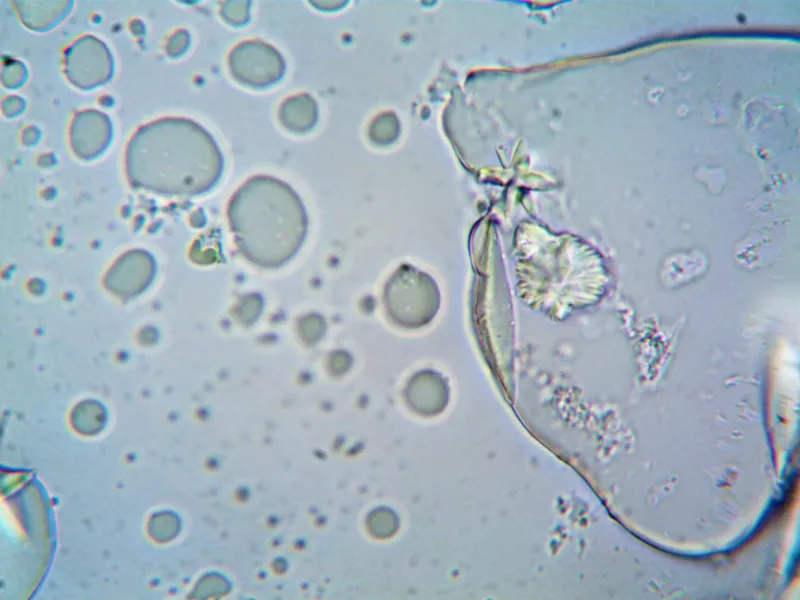
Photo by Photo by Logan Gutierrez on Unsplash on Unsplash
Few figures in the history of science occupy as pivotal a position as Theodor Schwann. A German physiologist working in the early nineteenth century, Schwann is credited as one of the principal architects of cell theory — the foundational biological principle that all living organisms are composed of cells and that the cell is the basic unit of life. For students in biology, history of science, and pre-medical programs across the United States, understanding Schwann's contributions is not only academically required but intellectually rewarding. This article provides a comprehensive overview of his work and a detailed framework for writing a rigorous, well-structured essay on the topic.
Who Was Theodor Schwann?
Theodor Schwann was born on December 7, 1810, in Neuss, in what is now Germany. He studied medicine at the University of Berlin, where he trained under the eminent physiologist Johannes Müller. Schwann demonstrated exceptional aptitude for experimental investigation and quickly distinguished himself through meticulous laboratory work. He is perhaps best known outside of cell theory for his discovery of Schwann cells — the glial cells responsible for producing the myelin sheath that insulates peripheral nerve fibers, a discovery that remains central to neuroscience today.
However, it is his 1839 publication, Mikroskopische Untersuchungen über die Übereinstimmung in der Struktur und dem Wachsthum der Tiere und Pflanzen (translated as Microscopical Researches into the Accordance in the Structure and Growth of Animals and Plants), that secured his place in the foundational canon of biology.
Schwann's Core Contribution to Cell Theory
Before Schwann's work, cell-based observations had been largely confined to plant material. Robert Hooke had famously described "cells" in cork in 1665, and Matthias Jakob Schleiden had proposed in 1838 that plants were composed of cells. The critical gap was animal tissue — no one had yet convincingly extended the cellular framework to the animal kingdom.
Schwann filled that gap. After a conversation with Schleiden in which the botanist described the role of the cell nucleus in plant development, Schwann recognized a structural parallel with nucleated cells he had observed in animal notochord tissue. He proceeded to conduct systematic microscopic examinations of a wide range of animal tissues — cartilage, nerve tissue, muscle, and embryonic material — and concluded that all animal tissues, like plant tissues, were fundamentally composed of cells.
His 1839 work articulated what became the first two tenets of classical cell theory:
- All living organisms are composed of one or more cells.
- The cell is the basic unit of structure and function in all living organisms.
The third tenet — that all cells arise from pre-existing cells — was later contributed by Rudolf Virchow in 1855, correcting an error in Schwann's own thinking. Schwann had incorrectly proposed that cells could arise spontaneously from non-cellular material, a concept he called "cytoblastema." This was a significant limitation of his framework, and honest scholarly treatment of Schwann must acknowledge it.
The Scientific Context: Why His Work Was Revolutionary
To appreciate the magnitude of Schwann's contribution, students must understand the intellectual landscape of early nineteenth-century biology. Vitalism — the belief that living organisms were animated by a special life force fundamentally different from physical and chemical processes — was still a dominant paradigm. Schwann's work was part of a broader materialist turn in biology, asserting that living structures could be understood through systematic observation and physical principles rather than metaphysical forces.
His collaboration with Schleiden also illustrates an important feature of scientific progress: the cross-pollination of ideas across disciplines. Schwann was an animal physiologist; Schleiden was a botanist. Their synthesis produced a unified theory that transcended either field alone.
Limitations and Scholarly Honesty
A strong essay on Schwann's contributions must engage honestly with the limitations of his work. His cytoblastema hypothesis — that cells could spontaneously generate from unstructured organic material — was incorrect and was superseded by Virchow's omnis cellula e cellula (every cell from a cell). Additionally, some historians of science have argued that Schwann received disproportionate credit relative to Schleiden, whose earlier plant-cell work provided the conceptual foundation Schwann extended.
Engaging with these complexities does not diminish Schwann's legacy; it strengthens scholarly analysis by demonstrating critical thinking.
How to Write a Strong Essay on Theodor Schwann
For students assigned an essay on Schwann's contribution to cell theory, the following structure is recommended for academic contexts at the high school, AP, or introductory college level.
Introduction Open with a brief orientation to cell theory and its significance in biology. Introduce Schwann as a central figure and state your thesis clearly. A strong thesis does more than identify Schwann's contribution — it makes a claim about its significance or situates it within a larger argument. Example: "Theodor Schwann's 1839 extension of cell theory to animal tissues unified biology around a single structural principle, fundamentally reshaping how scientists understand life at the cellular level."
Background and Context Provide relevant historical context. Discuss the state of cell biology before Schwann, including Hooke's observations and Schleiden's plant-cell work. This demonstrates that you understand Schwann's contribution as part of a scientific process, not an isolated event.
Schwann's Discoveries and Methods Detail his microscopic investigations, his key findings regarding animal tissue, and the specific claims he made in his 1839 publication. Be precise: name specific tissues he examined and explain how his observations led to his conclusions.
Impact and Legacy Discuss how Schwann's work influenced subsequent biological research. Connect his contributions to Virchow's correction, to the germ theory of disease, and to modern cell biology.
Limitations and Critical Analysis Address the cytoblastema error and any historiographical debates about credit and attribution. This section distinguishes a sophisticated essay from a summary.
Conclusion Synthesize your argument. Restate your thesis in light of the evidence presented and offer a final evaluative statement about Schwann's place in scientific history.
Recommended Academic Sources
Students writing on this topic should consult primary and secondary scholarly sources. Recommended starting points include:
- Schwann's original 1839 text (available in English translation through major university library databases)
- The History of Cell Theory by John R. Baker, published in Quarterly Journal of Microscopical Science
- Gerald Geison's work on nineteenth-century German physiology
- Peer-reviewed articles available through JSTOR, PubMed History of Medicine collections, and your institution's library portal
MyiLibrary Science encourages all students to access materials through accredited library systems rather than unverified online summaries, ensuring the accuracy and scholarly integrity of their research.
Conclusion
Theodor Schwann's contribution to cell theory remains one of the defining moments in the history of biological science. By extending the cellular framework from plants to animals, he helped establish the conceptual foundation upon which all of modern biology rests. For students engaging with this topic — whether for a class essay, an AP exam free-response question, or independent research — a thorough, critically informed understanding of his work is both achievable and deeply worthwhile.