Garage Galileos: How Amateur Scientists Are Stress-Testing Published Research on Modest Budgets
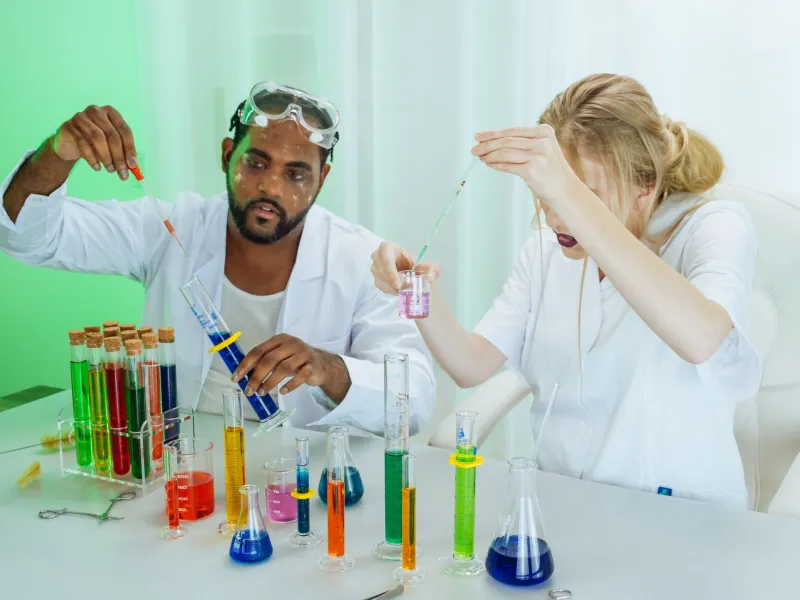
In a converted garage in suburban Columbus, Ohio, a former software engineer named Marcus routinely spends his weekends running bacterial growth experiments. His equipment—a repurposed incubator, a secondhand spectrophotometer, and reagents ordered through a community laboratory cooperative—cost him less than two thousand dollars in total. His goal is not to win a grant or earn authorship credit. It is simply to find out whether a 2021 paper on antibiotic-resistant E. coli strains holds up when someone without institutional resources attempts to reproduce it.
Marcus is not alone. Across the country, a loosely networked movement of amateur researchers, retired scientists, educators, and curious professionals is quietly doing something that the academic establishment has long struggled to organize systematically: replicating published findings on a shoestring budget and sharing the results openly.
The Reproducibility Problem Meets the DIY Ethic
The reproducibility crisis in science is well documented. Multiple large-scale efforts—most notably the Open Science Collaboration's 2015 attempt to replicate one hundred psychology studies, which succeeded with fewer than half—have revealed that a troubling proportion of published findings cannot be confirmed even by well-funded professional laboratories. The causes are varied: small sample sizes, undisclosed methodological choices, publication bias toward positive results, and the simple complexity of replicating precise laboratory conditions.
What is less discussed is the emerging role that amateur replication is beginning to play as an informal, distributed check on this problem. Community laboratories such as Genspace in Brooklyn, BioCurious in Silicon Valley, and Hackteria's affiliated spaces around the country have quietly become hubs where motivated non-professionals can access equipment, mentorship, and collaborative networks. The tools available to these groups have improved dramatically over the past decade. Desktop PCR machines, open-source Arduino-based sensors, affordable microscopes with digital imaging capabilities, and freely accessible statistical software have collectively lowered the barrier to serious experimental work.
What Can Actually Be Replicated at Home?
The honest answer is: more than most people assume, and less than enthusiasts sometimes claim.
Certain categories of research lend themselves well to amateur replication. Studies involving microbiology at biosafety level one—meaning organisms that pose minimal risk to healthy adults—are among the most accessible. Plant biology experiments, including those examining soil chemistry, growth responses to light spectra, and seed germination under varying conditions, are particularly well suited to home or community settings. Physics demonstrations, chemistry experiments involving common reagents, and behavioral or cognitive psychology studies that rely on surveys or observational tasks are also within reach.
Other domains present formidable obstacles. Neuroscience research requiring functional MRI equipment, particle physics, advanced genomics, and studies involving controlled substances or high-risk biological agents are, for obvious reasons, beyond the practical reach of amateur laboratories. Responsible practitioners in the DIY science community are generally candid about these boundaries, and organizations like the DIYbio network have published community safety guidelines that echo many of the ethical frameworks governing professional research.
The practical challenges extend beyond equipment. Replicating a published study requires access to the original methodology in sufficient detail—a requirement that highlights a related problem in academic publishing, where methods sections are frequently too abbreviated to allow genuine reproduction even by trained professionals. Amateur replicators often find themselves corresponding directly with original authors to request clarification, a dynamic that some researchers welcome and others find intrusive.
Crowdsourced Validation as an Informal Peer Check
Perhaps the most structurally significant aspect of this movement is not any individual experiment but the aggregation of results across many independent attempts. Platforms such as the Open Science Framework allow both professional and amateur researchers to register replication attempts and post results regardless of outcome. When dozens of independent actors, working in varied conditions with heterogeneous equipment, attempt the same experiment and consistently arrive at similar conclusions, that convergence carries genuine evidential weight—even if no single amateur effort would satisfy a journal's peer review standards.
Conversely, when multiple independent replication attempts consistently fail to reproduce a finding, that pattern is scientifically meaningful. It does not constitute definitive refutation, but it does generate legitimate questions that the research community ought to address. Several professional scientists interviewed for this piece acknowledged that amateur replication data, while imperfect, has occasionally prompted them to revisit their own published work.
Dr. Priya Nandakumar, a microbiologist at a Midwestern state university who has collaborated informally with community laboratory groups, described the dynamic carefully. "The data quality varies enormously," she noted, "but the motivation is often exemplary. When a community lab runs the same protocol fifteen times and keeps getting a different result than we published, I think that deserves a serious look, not dismissal."
Resources for the Aspiring Replicator
For readers of MyiLibrary Science who are interested in exploring this space, a growing body of curated resources supports responsible participation. The Protocol Exchange, hosted by Nature, offers freely accessible experimental protocols across multiple disciplines. PubMed Central provides open-access versions of thousands of peer-reviewed studies whose methods can serve as replication targets. The Open Science Framework offers free project registration, pre-registration templates, and data archiving tools that lend structure and credibility to independent replication efforts.
Community laboratory directories maintained by organizations like BioCurious and the Global Community Biosummit network can help prospective participants locate shared laboratory spaces equipped with instruments that would be impractical to purchase individually. Many of these spaces offer introductory memberships, safety training, and mentorship programs that bridge the gap between enthusiasm and competence.
For those working entirely at home, kits designed for educational use—including those from companies like the ODIN and Amino Labs—provide curated materials and guided protocols that meet established safety standards while enabling genuine experimental inquiry.
Legitimate Limitations and the Importance of Intellectual Humility
Advocates for the DIY replication movement are careful, or ought to be, to situate their work within an appropriate epistemic framework. Amateur replication attempts are best understood as hypothesis-generating rather than hypothesis-settling. A failed replication in a garage laboratory does not invalidate a peer-reviewed finding; it raises a question. A successful one does not independently confirm it; it adds a data point.
Safety considerations deserve equal emphasis. The same accessibility that makes DIY science appealing also removes the institutional safeguards—biosafety committees, chemical hygiene officers, equipment calibration protocols—that professional laboratories rely upon. Responsible practitioners treat these not as bureaucratic inconveniences but as genuine protections for themselves, their families, and their communities.
The most intellectually honest participants in this movement describe their work not as a challenge to professional science but as an extension of its core values: transparency, reproducibility, and the willingness to subject claims to independent scrutiny. In that sense, the garage laboratory is less a rejection of the academic tradition than an attempt to hold it to its own stated standards—conducted, improbably but sincerely, one repurposed incubator at a time.