When the Researcher Leaves, So Does the Research: The Silent Crisis of Vanishing Scientific Knowledge

Picture a laboratory at a mid-sized public university in the Midwest. Forty years of ecology fieldwork live inside it—hand-labeled specimen jars, spiral notebooks filled with Latin annotations, and a hard drive whose file-naming conventions only one person on earth fully understands. Then, in the span of a single academic semester, that person retires. The notebooks go into storage. The hard drive sits in an unlabeled box. The graduate students move on to other advisors. Within eighteen months, a dataset that took four decades and millions of federal research dollars to compile has, for all practical purposes, ceased to exist.
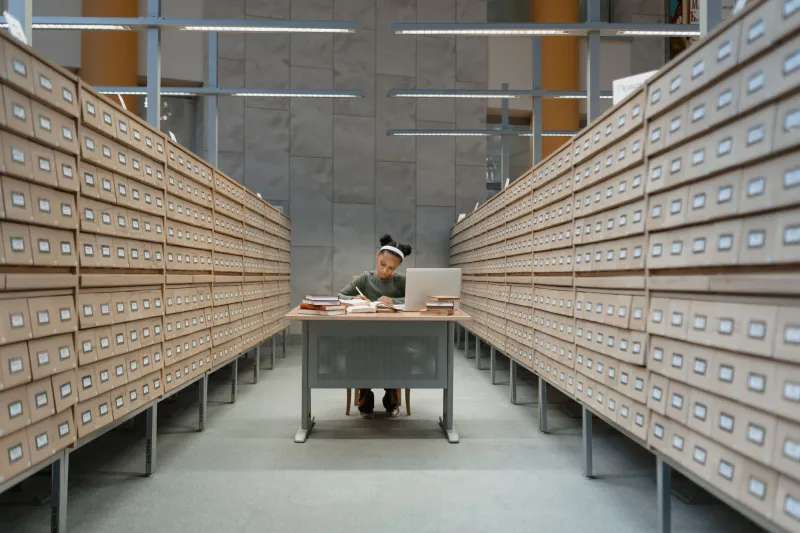
This is not a hypothetical. Variants of this scenario play out at research universities, federal agencies, and private research institutes across the United States every single year. Scientists call it, informally, the data graveyard—the accumulating mass of experimental records, observational logs, and analytical frameworks that vanish not through negligence or malice, but through the simple absence of any system designed to prevent their disappearance.
The Scale of What Is Being Lost
Quantifying the problem is itself part of the problem. Because orphaned data rarely generates formal incident reports, the full scope of institutional knowledge loss remains poorly documented—an irony that researchers who study scientific infrastructure find both maddening and instructive. What evidence does exist, however, is sobering.
A widely cited study published in the journal Current Biology found that the availability of ecological datasets declines sharply with age, with data more than two decades old having only a fraction of the accessibility of recently published material. The authors attributed much of this attrition not to deliberate deletion but to what they termed "passive loss"—storage media that degrades, email addresses that expire, and researchers who simply cannot be located after institutional transitions.
At the federal level, the situation is complicated by the patchwork nature of data-retention requirements across agencies. The National Institutes of Health, the National Science Foundation, and the Department of Energy each maintain distinct mandates for how long grant-funded data must be preserved and in what format. Yet compliance monitoring remains inconsistent, and the mandates themselves rarely account for the human dimension of data custody—the fact that a dataset is only as accessible as the person who knows how to interpret it.
More Than Files: The Problem of Tacit Knowledge
Data files, even when physically preserved, represent only one layer of what is lost during an unmanaged research transition. Equally significant—and far harder to archive—is what organizational theorists call tacit knowledge: the accumulated understanding that exists in a researcher's mind rather than in any document.
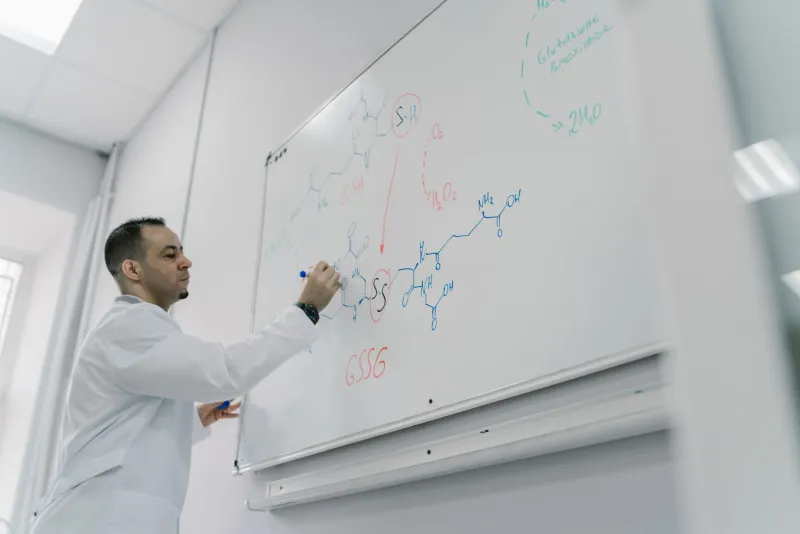
A senior chemist who spent thirty years studying polymer degradation carries with her not only experimental results but a nuanced understanding of why certain trials failed, which equipment quirks skewed early readings, and how the research questions themselves evolved in response to unexpected findings. This contextual intelligence cannot be captured in a data dictionary or a methods section. It lives in conversation, in annotation, in the kind of slow knowledge transfer that only happens when a departing researcher and an incoming one spend sustained time working side by side.
In many American academic departments, that overlap simply does not exist. Hiring timelines, budget constraints, and the structural pressures of semester-based academic calendars frequently mean that a retiring professor's last day and a replacement's first day are separated by months rather than weeks. The window for meaningful knowledge transfer closes before it was ever properly opened.
Case Studies in Disappearance
The longitudinal climate monitoring station at a prominent New England research university offers a particularly well-documented example of institutional memory loss. When the station's founding director retired in the early 2000s, a substantial portion of the station's pre-digital temperature and precipitation records existed only in physical logbooks stored in the director's personal office. A portion of those records was eventually digitized through a National Oceanic and Atmospheric Administration grant, but historians of science who later examined the archive noted significant gaps corresponding precisely to periods when the director had been on sabbatical and record-keeping had been delegated to graduate assistants whose own notes were never systematically incorporated.
A parallel case emerged in agricultural research, where a USDA plant geneticist's retirement triggered the effective loss of more than two decades of heirloom seed trial data. The physical seeds themselves were preserved in a federal seed bank, but the accompanying phenotypic observation records—which would have made the seed collection scientifically actionable—had been stored on a proprietary database system that the researcher had built independently and that no one else at the institution knew how to operate.
These cases are not exceptional. They are representative.
What Sustainable Knowledge Transfer Actually Looks Like
The good news is that the problem, while structural, is not intractable. Researchers and institutions that have confronted it directly have developed a set of practices that, taken together, constitute something approaching a genuine succession framework for scientific knowledge.
Begin documentation before it feels necessary. The most effective knowledge-transfer systems are not assembled in the final months before a researcher's departure. They are built incrementally, as a routine dimension of research practice. Maintaining a "lab manual" that describes not only protocols but the reasoning behind them—why certain methodological choices were made, what alternatives were considered and rejected—creates a living document that serves both current lab members and future inheritors of the work.
Separate data from the people who created it. This means depositing datasets in institutional repositories or discipline-specific archives rather than relying on personal servers or cloud accounts tied to individual email credentials. The Harvard Dataverse, the Inter-university Consortium for Political and Social Research, and domain-specific archives like the National Centers for Environmental Information all offer infrastructure specifically designed to outlast any individual researcher's institutional affiliation.
Treat knowledge transfer as a scheduled institutional event. Several research universities have begun piloting formal "research transition reviews" triggered whenever a faculty member announces retirement or a significant career change. These reviews, modeled loosely on the after-action reports used in federal emergency management, systematically inventory active datasets, identify custody gaps, and assign responsibility for ongoing stewardship before the departing researcher has left the building.
Invest in overlap. Where budget permits, the most effective transitions involve a period of genuine co-presence between outgoing and incoming researchers. Even a single semester of structured overlap—during which the departing scientist actively annotates, explains, and contextualizes their work for a successor—can preserve knowledge that no amount of retroactive documentation could recover.
The Institutional Responsibility
It would be easy to frame the data graveyard problem as a failure of individual researchers—a consequence of professional habits that prioritize publication over preservation. That framing, however, misattributes the cause. Individual researchers operate within institutional structures that have historically provided no systematic incentive, infrastructure, or protected time for knowledge-transfer work. Tenure and promotion systems reward the production of new findings, not the careful stewardship of existing ones.
Changing that calculus requires deliberate institutional choice. It requires research universities, federal funding agencies, and professional scientific societies to treat knowledge preservation as a first-order obligation rather than an administrative afterthought. The National Science Foundation's recent emphasis on data management plans in grant applications represents a meaningful step in this direction, but plans are only as valuable as the compliance mechanisms and cultural norms that surround them.
The researchers who built America's scientific infrastructure over the past half century did so with the expectation that their work would endure—that the datasets they assembled, the methods they refined, and the questions they opened would remain available to the scientists who came after them. Honoring that expectation is not merely a matter of archival housekeeping. It is a fundamental condition of scientific progress.
The data graveyard grows quietly. Preventing it from growing further requires making noise.