Buried in Plain Sight: The Vast Ocean of Forgotten Research Data That Could Reshape Scientific Discovery
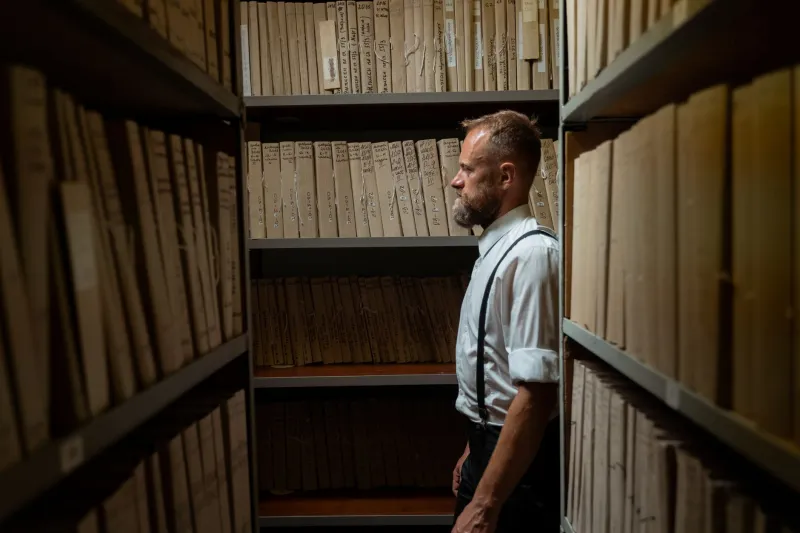
Every year, American research universities and federal agencies collectively spend tens of billions of dollars funding scientific experiments. Graduate students run trials, principal investigators compile results, and teams publish findings in peer-reviewed journals. Then, in a pattern so routine it rarely draws comment, the underlying data quietly disappears—not destroyed, precisely, but rendered inaccessible through institutional neglect, staff turnover, obsolete file formats, and the simple passage of time.
Scholars who study research infrastructure have begun calling this phenomenon "digital dark matter": an enormous, largely unmeasured accumulation of raw experimental files, annotated lab notebooks, calibration records, and supplementary materials that exist somewhere in the physical or digital world but cannot be reliably found, retrieved, or reused. The scale of the problem is difficult to overstate. Estimates from data preservation researchers suggest that the majority of raw scientific data generated over the past three decades is effectively unreachable today, even when the published papers derived from it remain indexed in major academic databases.
For students and scholars using resources like those curated through academic digital libraries, this invisible deficit carries real consequences. A literature review that appears comprehensive may rest on a foundation riddled with gaps—findings that cannot be independently verified, meta-analyses that draw on incomplete records, and entire lines of inquiry that stall because baseline datasets have vanished.
How Data Disappears Without Anyone Noticing
The mechanisms of data loss are mundane rather than dramatic. A researcher retires and their department fails to migrate files from a decommissioned server. A postdoctoral fellow moves to a position in industry, taking with them the only working knowledge of how a particular dataset was organized. A university website undergoes a redesign, and supplementary material attachments linked in published papers return 404 errors. A hard drive containing five years of climate measurements sits in a storage closet because no one was assigned to digitize it.
Federal funding agencies, including the National Institutes of Health and the National Science Foundation, have increasingly required data management plans as a condition of grant awards. These plans describe how researchers intend to store and share their data after a project concludes. In practice, however, compliance has been uneven. Plans are submitted, approved, and then rarely audited for follow-through. The requirement to create a plan is not the same as a requirement to execute one successfully.
Making matters worse, scientific data is not a uniform commodity. A dataset from a 2003 genomics study may be stored in a proprietary file format that modern software cannot open without specialized legacy tools. Field observation records from ecological surveys may exist only as handwritten notebooks that were never scanned. Instrument output files may be meaningful only when accompanied by configuration metadata that was stored separately—and subsequently lost.
The Emerging Science of Data Recovery
A growing coalition of librarians, archivists, computer scientists, and research administrators is attempting to address the problem systematically. The effort draws on disciplines as varied as digital forensics, metadata standards development, and machine learning, and it is beginning to produce tangible tools that scholars can employ today.
The Research Data Alliance, an international consortium with substantial American participation, has developed interoperability frameworks designed to make datasets stored in disparate systems mutually discoverable. Platforms such as the Dataverse Network, maintained by Harvard University, and Zenodo, operated through CERN, provide open repositories where researchers can deposit datasets with standardized metadata, making them searchable by other investigators regardless of institutional affiliation.
Perhaps more innovative are initiatives focused on recovering data that was never formally deposited anywhere. Computational tools can now crawl archived versions of defunct websites—preserved through services like the Internet Archive's Wayback Machine—and extract linked data files that would otherwise be considered permanently lost. Some research libraries have established dedicated data rescue programs, dispatching staff to contact retired faculty members and request that legacy materials be transferred to institutional repositories before they are discarded.
At the federal level, the Office of Science and Technology Policy issued a memo in 2022 directing agencies to strengthen public access requirements for both publications and underlying data. Implementation timelines vary by agency, but the policy direction signals a recognition that data preservation is not merely a matter of archival housekeeping—it is a condition of scientific accountability.
Why Recovered Data Could Accelerate Discovery
The case for prioritizing data recovery rests on a straightforward premise: reanalyzing existing data is dramatically less expensive than generating new data, and in many cases it is the only way to answer questions that were not anticipated when the original research was conducted.
Consider the field of epidemiology. Longitudinal health datasets collected over decades represent an irreplaceable record of how populations respond to environmental exposures, dietary changes, and medical interventions across time. When such datasets are lost, researchers cannot simply repeat the study—the cohort of participants from 1985 cannot be reassembled. The loss is permanent and the scientific cost is incalculable.
Similarly, in fields like astronomy and climate science, historical observational records carry unique value precisely because they document conditions that no longer exist and cannot be recreated in a laboratory. Recovering a cache of atmospheric measurements from a monitoring station that closed in the 1990s may provide exactly the baseline data needed to validate a contemporary climate model.
Beyond these domain-specific arguments, there is a broader case rooted in research efficiency. Systematic data reuse reduces redundancy, allowing investigators to build more directly on prior work rather than reconstructing foundational measurements from scratch. It also creates new opportunities for interdisciplinary synthesis—a sociologist, an economist, and a public health researcher may each find distinct value in the same archived dataset, yielding insights that no single discipline would have generated independently.
What Students and Independent Researchers Can Do
For readers who engage with scientific literature as students, educators, or informed citizens, the data preservation crisis is not merely an abstraction. It affects the reliability of the sources consulted in coursework, the completeness of evidence bases underlying policy decisions, and the integrity of the scientific record as a whole.
Several practical steps can help. When reviewing published research, check whether the authors have deposited underlying data in a named repository and whether that deposit is still accessible. If a paper's supplementary materials are inaccessible, contacting corresponding authors directly—particularly for relatively recent publications—can sometimes recover files that have simply been overlooked rather than permanently lost. Academic librarians at most universities are increasingly trained in data literacy and can assist in locating archived datasets relevant to a given research question.
For those interested in contributing to the recovery effort directly, citizen science initiatives focused on data transcription and digitization offer accessible entry points. Projects that convert handwritten historical records into machine-readable formats require no specialized scientific training, only attention to detail and a willingness to engage with primary source materials.
Toward a Culture of Data Stewardship
The data graveyard problem is, at its core, a cultural challenge as much as a technical one. Scientific communities have long rewarded the production of new findings over the preservation of existing ones. Journals publish novel results; grant panels fund new experiments; tenure committees evaluate publication records. The quiet, unglamorous work of maintaining a well-organized, publicly accessible dataset rarely registers in these reward structures.
Changing this calculus will require deliberate effort from funding agencies, academic institutions, journal publishers, and the researchers themselves. The tools to catalog, recover, and share scientific data are improving rapidly. What remains to be built is the professional and institutional will to use them consistently.
The data already exists. It was paid for, in many cases, with public funds. Recovering it is not a peripheral concern of scientific librarianship—it is a precondition for the cumulative, self-correcting enterprise that science aspires to be.