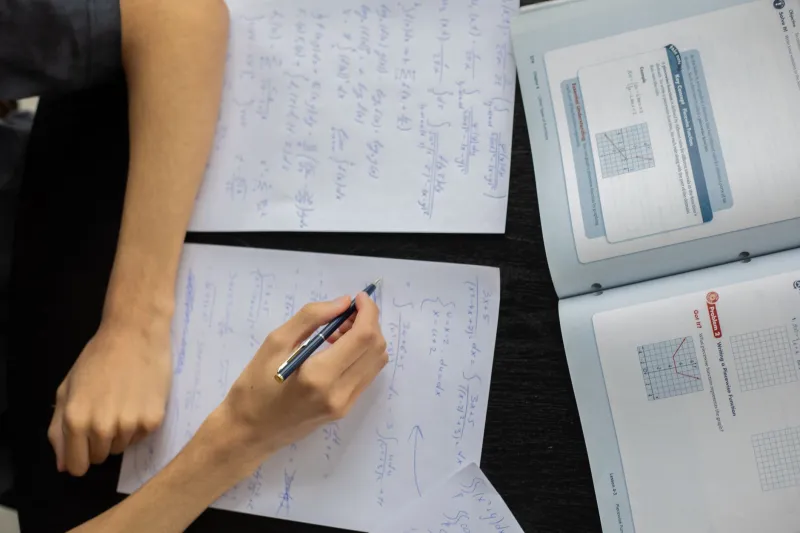
Mastering Academic Exams: A Comprehensive Study Resource Guide for Students and Scholars

Academic examinations remain one of the most significant benchmarks in a student's educational journey. Whether you are preparing for a high school science final, an Advanced Placement assessment, a college midterm, or a standardized test such as the SAT, ACT, or GRE, the approach you take to studying can make a measurable difference in your outcome. At MyiLibrary Science, our mission is to connect curious minds with curated resources that make learning more effective, accessible, and meaningful.
This guide is designed to serve as a central hub for students and scholars seeking structured support for academic exam preparation — from understanding how exams are designed to locating the best tools for review.
Understanding What Exams Are Actually Measuring
Before diving into study strategies, it is worth understanding the purpose of academic assessments. Most exams — particularly in the sciences — are designed to evaluate three distinct cognitive levels based on frameworks like Bloom's Taxonomy:
- Knowledge and recall: Can you remember key facts, definitions, and formulas?
- Comprehension and application: Can you explain concepts in your own words and apply them to new scenarios?
- Analysis and synthesis: Can you evaluate evidence, compare theories, and construct arguments?
Many students focus almost exclusively on memorization, which addresses only the first tier. High-performing students invest time in understanding why concepts work, not just what they are. This distinction becomes especially important in science courses, where application and analysis questions frequently appear on exams.
Building an Effective Study Plan
A well-structured study plan is one of the most evidence-supported tools available to students. Research in educational psychology consistently demonstrates that distributed practice — studying material across multiple shorter sessions over time — outperforms massed practice, commonly known as cramming.
Step 1: Audit Your Syllabus
Begin by reviewing your course syllabus and any exam study guides provided by your instructor. Identify which units or chapters are included, how many questions cover each topic, and what types of questions will appear (multiple choice, free response, lab-based, etc.).
Step 2: Prioritize High-Weight Topics
Not all content carries equal weight on an exam. Use your syllabus, past quizzes, and instructor feedback to identify which topics receive the most emphasis. Allocate proportionally more study time to these areas.
Step 3: Use Active Recall Techniques
Passive re-reading is one of the least effective study methods available. Instead, use active recall strategies:
- Flashcards: Physical or digital (tools like Anki are widely used among US college students)
- Practice problems: Work through problems without looking at solutions first
- Self-quizzing: Close your notes and attempt to reconstruct key concepts from memory
- Teaching the material: Explain concepts aloud as if presenting to a peer
Step 4: Use Spaced Repetition
Spaced repetition involves reviewing material at increasing intervals over time. This technique leverages the brain's natural forgetting curve to strengthen long-term retention. Many digital tools, including those available through academic library platforms, incorporate spaced repetition into their design.
Locating Quality Study Resources
Access to high-quality study materials is a critical factor in exam performance, yet many students rely on unvetted sources found through general internet searches. MyiLibrary Science encourages students to prioritize academically credible resources.
Textbooks and Course Materials
Your assigned textbook remains the most directly relevant resource for any course-based exam. Most textbooks include end-of-chapter review questions, glossaries, and practice problems that align closely with exam formats.
Open Educational Resources (OER)
For students seeking supplemental materials, Open Educational Resources offer free, peer-reviewed content. Platforms such as OpenStax provide college-level science textbooks at no cost, covering subjects from biology and chemistry to physics and statistics.
Academic Library Databases
US college and university libraries provide access to databases such as JSTOR, PubMed, and Science Direct. Even for undergraduate exam prep, reviewing original research articles can deepen conceptual understanding and strengthen analytical skills.
Khan Academy and Similar Platforms
For foundational review in mathematics, biology, chemistry, and physics, Khan Academy offers free, structured video lessons aligned with US curriculum standards. These are particularly useful for students who need to revisit prerequisite knowledge before tackling advanced exam content.
Science-Specific Exam Strategies
Science exams present unique challenges that require subject-specific preparation strategies.
Laboratory and Data Interpretation Questions
Many science exams — particularly AP Biology, AP Chemistry, and AP Physics — include questions that require students to interpret experimental data, identify variables, and evaluate conclusions. Practice by reviewing past lab reports and working through data analysis exercises.
Formula Sheets and Equation Fluency
In physics and chemistry, knowing when and how to apply a formula is as important as memorizing it. Practice solving multi-step problems that require selecting the correct equation and understanding the units involved.
Scientific Vocabulary
Science disciplines rely on precise terminology. Building a strong scientific vocabulary improves both reading comprehension and written response quality. Create a running glossary throughout your study sessions and quiz yourself regularly.
Managing Exam Anxiety
Test anxiety is a documented psychological phenomenon that affects a significant proportion of US students. Mild anxiety can be performance-enhancing, but severe anxiety can impair recall and reasoning. Evidence-based strategies for managing test anxiety include:
- Adequate sleep: Sleep consolidates memory and supports cognitive function
- Structured preparation: Confidence built through consistent study reduces anxiety
- Mindfulness and breathing exercises: Brief mindfulness practice before an exam has been shown to reduce anxiety symptoms
- Positive self-talk: Reframing anxious thoughts with neutral or constructive language supports performance
After the Exam: Learning from Results
Exam performance is most valuable when treated as diagnostic information rather than a final judgment. After receiving your results, review every incorrect answer to understand why you made the error — whether it was a knowledge gap, a misread question, or a careless mistake. This reflective practice builds stronger performance over time.
At MyiLibrary Science, we believe that exams are not endpoints but checkpoints in a lifelong process of learning. The resources, strategies, and habits you build now will serve you well beyond any single assessment.