Skills and Applications Chapter 4 Answer Key Walkthrough: A Scholar's Guide to Working Through Practice Problems
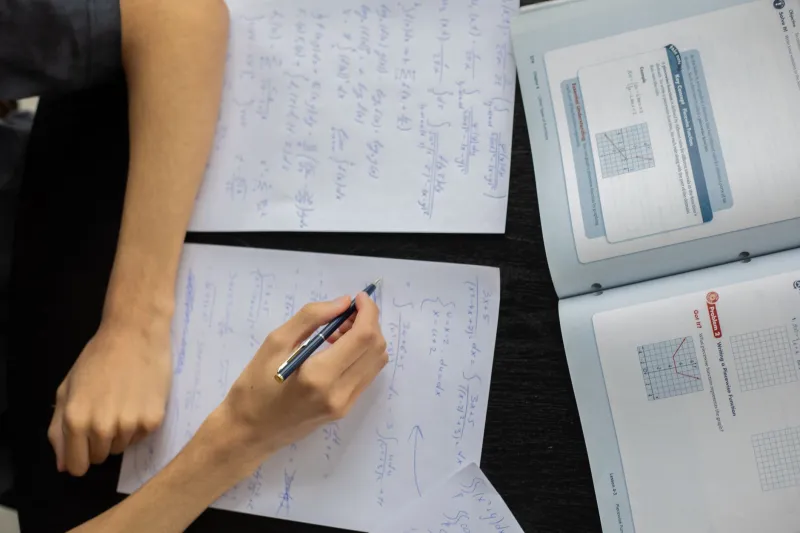
One of the most common — and most misunderstood — tools in a student's academic toolkit is the answer key. Too often, students use answer keys as a shortcut to completion rather than a resource for genuine learning. At MyiLibrary Science, we are committed to helping students engage with academic materials in ways that build lasting understanding. This guide is designed to help you use Skills and Applications answer keys — particularly those found in Chapter 4 of commonly used science and mathematics textbooks — as true learning instruments.
What Are "Skills and Applications" Sections?
Most US science and mathematics textbooks are organized to separate content into distinct practice categories. "Skills" questions typically test direct application of a rule, formula, or procedure introduced in the chapter. "Applications" questions, by contrast, require students to apply that same knowledge in a real-world or extended context — often requiring multiple steps, unit conversions, or integration of concepts from earlier chapters.
Chapter 4 in many widely used textbooks — including those in physics, chemistry, algebra, geometry, and earth science — represents a significant conceptual threshold. By the fourth chapter, foundational vocabulary and procedures have been introduced, and Skills and Applications sections begin to test whether students can synthesize that knowledge rather than simply recall it.
Why Answer Keys Should Be Used After Attempting Problems
The research on academic learning is unambiguous: attempting a problem before consulting the answer produces significantly better retention than reading the solution first. This phenomenon, known in educational psychology as the "generation effect," suggests that the act of retrieving or constructing an answer — even an incorrect one — primes the brain to encode the correct information more deeply when it is subsequently encountered.
This means the most effective use of a Chapter 4 answer key follows this sequence:
- Read the problem carefully and identify what is being asked
- Attempt a solution using your notes, formulas, and reasoning
- Check your answer against the key
- If correct, verify that your method matches the expected approach
- If incorrect, use the key to trace where your reasoning diverged
Skipping step 2 — going directly from reading the problem to consulting the key — eliminates the cognitive effort that drives learning.
How to Read an Answer Key Like a Scholar
Not all answer keys are created equal. Some provide only final numerical answers. Others include worked solutions with step-by-step explanations. Understanding how to extract maximum value from each type is an important academic skill.
Final-Answer-Only Keys
If your answer key provides only the final answer, your job is to reconstruct the reasoning independently. After confirming whether your answer matches:
- If it matches: Write out your full solution method and verify each step is logically sound
- If it does not match: Work backward from the correct answer to identify where your calculation or reasoning diverged
Worked-Solution Keys
Worked solutions are more instructive but carry a risk: students often read through them passively, assuming understanding without testing it. To avoid this:
- Cover the solution and attempt each step independently before revealing it
- After reading the full worked solution, close the key and reproduce the solution from memory
- Identify which steps were intuitive and which required the key's guidance — this reveals your actual knowledge gaps
Common Errors in Chapter 4 Skills and Applications Problems
Across multiple subject areas, Chapter 4 Skills and Applications sections tend to surface predictable categories of student error. Being aware of these in advance allows you to approach problems with greater care.
Unit Conversion Errors
In science courses — particularly physics and chemistry — Chapter 4 often introduces problems that require converting between units (e.g., meters to centimeters, grams to kilograms, seconds to hours). A correct conceptual approach paired with a unit conversion error will still yield an incorrect answer. Develop the habit of writing units at every step of your calculation.
Sign Errors in Multi-Step Problems
In algebra and physics, negative signs frequently cause errors in multi-step problems. When checking your work against an answer key, explicitly verify the sign of each intermediate result, not just the final answer.
Misidentifying the Variable Being Solved
Applications problems frequently ask for a derived quantity — acceleration rather than velocity, for example, or concentration rather than moles. Before beginning any calculation, underline or highlight exactly what the problem is asking you to find.
Skipping Intermediate Steps
Many students attempt to solve multi-step problems in their heads to save time. This dramatically increases error rates. The answer key's worked solution will typically show every intermediate step — if your scratch work does not, practice writing out each stage explicitly.
Using the Answer Key as a Diagnostic Tool
A pattern of errors across a chapter's Skills and Applications section is diagnostic information. Rather than treating each incorrect answer as an isolated mistake, look for trends:
- Multiple errors in Skills questions: This suggests the foundational procedure introduced in the chapter has not been fully internalized. Return to the chapter's explanatory text and worked examples before attempting more practice.
- Multiple errors in Applications questions only: This suggests you understand the procedure in isolation but struggle to apply it in context. Seek out additional word problems and scenario-based practice.
- Errors concentrated in specific problem types: This points to a specific knowledge gap that can be addressed through targeted review.
Supplementing Your Answer Key Work with Additional Resources
For students who find that the textbook's answer key does not provide sufficient explanation, several academically credible supplemental resources are available:
- Your textbook's companion website: Many major US textbook publishers offer online student resources, including additional practice problems and tutorial videos
- Your school or university's tutoring center: Peer tutors and professional academic support staff can walk through specific problems in real time
- Open educational resource platforms: Platforms such as Khan Academy offer free, curriculum-aligned video walkthroughs of common problem types in mathematics and science
- Your instructor's office hours: Bringing specific problems from the Skills and Applications section to office hours demonstrates initiative and allows for targeted feedback
Building Long-Term Mastery Beyond Chapter 4
Chapter 4 answer key work is not an end in itself. The skills you develop — careful problem setup, step-by-step reasoning, error analysis, and reflective review — are transferable to every subsequent chapter, every future course, and every professional context that requires analytical thinking.
At MyiLibrary Science, we encourage students to treat every answer key not as a source of answers, but as a mirror that reflects the current state of their understanding — and a map for where to go next. The goal is never simply to complete the problems. The goal is to understand them well enough that you could explain them to someone else.
That standard of understanding is what distinguishes a student who finishes a chapter from a scholar who has truly learned it.